Populations of bees, flies, beetles, and butterflies are declining fast! The fragility of the ecosystem is caused by disease, pesticides, and habitat loss.
What can you do to help? Convert your lawn, meadow, or prairie to a safe haven for pollinators.
If you want to hear the birds
Plant a tree
The best time to plant a tree was 20 years ago.
The second best time is today.
“Conservation is a state of harmony between men and land”
- Aldo Leopold
THE DARK SIDE OF A RICH, GREEN LAWN
The standard lawn contains no biodiversity or habitat or wildlife and pollinators. In Pennsylvania alone, there are 2 million acres of mowed lawn.
Maintaining a lawn takes work. Grass needs to be treated with fertilizer because the soil is not compatible with it. Turf wants water when the weather doesn’t provide it. Mowing requires time and takes energy; and pollinators disappear because they no longer have food to eat.
Can you take a positive step to protect and nurture your environment?
WHAT CAN YOU DO?
Meadow Conversion
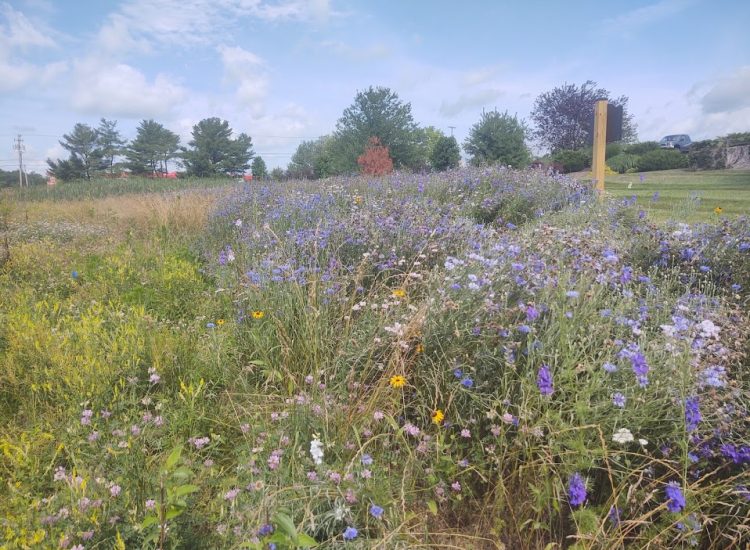
Lawns offer little to no erosion control and biodiversity. Converting your lawn into meadow will provide a wonderful habitat for wildlife and pollinators. By reducing/eliminating mowing, this saves the land/homeowner time and money. Landowners may often keep a mowed border around the meadow; this frames it beautifully, and highlights the meadow as an intentional feature of the landscape.
Prairie Conversion
Urban sprawl, agricultural intensification, and runoff from excessively manicured lawns have contributed to the increased degradation of wetlands on privately owned lands.
Prairie conversion can help reverse this process by improving overall water quality of streams, creeks, lakes, and wetlands–all while adding natural beautification with native plant species. These species are also pollinator-friendly, which is equally beneficial.
Tree/Shrub Conversion
By converting an area of lawn to trees/shrubs, the local streams, creeks, lakes, and wetlands reap the benefits, as well as aquatic species and wildlife. Trees and shrubs also contribute other functions and benefits; such as producing harvestable products (fruit, nuts, and flowers). The advantages to local wildlife and pollinators are numerous.
Infiltration Beds
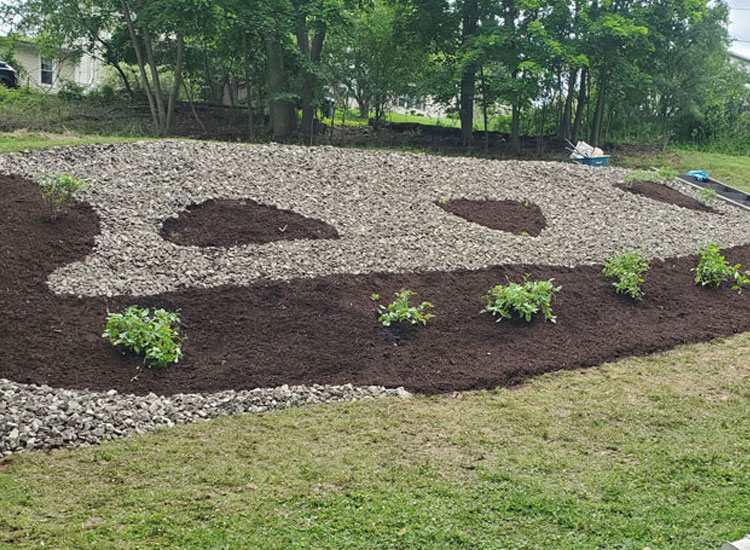
Infiltration Beds are used as a means to temporarily store runoff water in a subsurface storage media, such as stone or gravel. They are ideally suited for large, flat spaces such as lawns, meadows, and playfields. Low sediment level water, such as roof runoff, is best for connection to an Infiltration Bed.
Some of the benefits associated with Infiltration Beds include (but are not limited to):
Reduce stormwater runoff volume and rate
Help to maintain aquifer recharge.
Preserve or create valuable open natural space
Rain Gardens & Bioswales
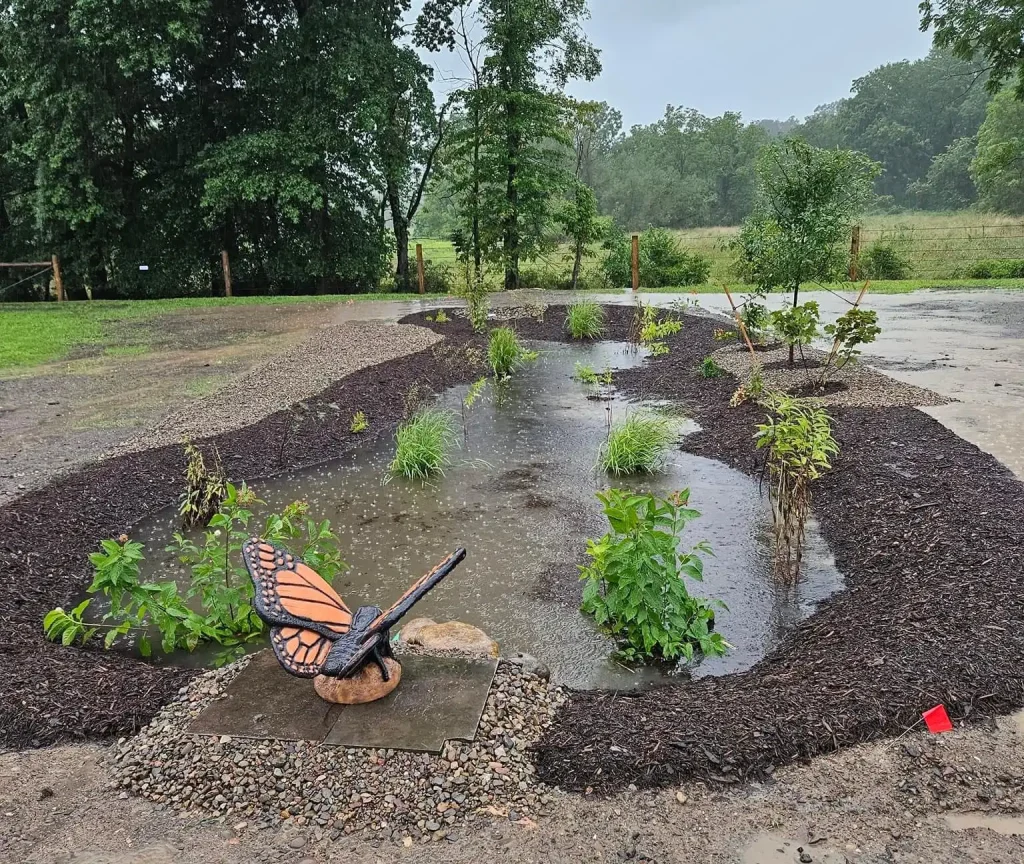
Rain Gardens and Bioswale are very similar, but have two different functions. The function of a rain garden is to capture and temporarily store rainwater. Bioswales are designed to slow down rainwater by means of a curved or linear path.
Rain Gardens are designed to temporarily hold and filter the water as it slowly infiltrates deeper into the soil. They are typically planted with tougher, deep-rooted plants that enhance the soil’s ability to soak up water.
Bioswales are a more narrow version of a rain garden, which allows the water to move more swiftly to another part of the garden (typically a rain garden), or to move the water to an existing drainage and/or storm water system.
If you live in Pennsylvania, you are eligible to certify your pollinator friendly garden with the Penn State Master Gardeners.
Some tips & tricks for maintaining your Conservation Landscape:
Use primarily native plant and tree species; they are better adapted to the local soil conditions and require less maintenance.
Use rain garden and bioswale techniques to better manage water runoff. This allows rainwater to slow down, spread out, and soak in.
Always be mindful of where the water on your land will eventually end up. Use of riparian buffers on land that abuts streams, creeks, lakes, and wetlands makes for a healthier biosystem.
Invasive Species identification and control services
There are many tools and services available for identifying and mitigating invasive species.
Controlling invasive species is a vital step in conservation landscaping; it is necessary for maintaining healthy biodiversity in different landscapes. Invasive plant species often have no natural predator, thus allowing them to rapidly take over large areas of land. Being familiar with native and non-native species is important to be able to maintain conservation landscapes and ultimately, the environment.
Native Creations uses many years of plant and herbicide knowledge as well as training to effectively and strategically remove invasive species.